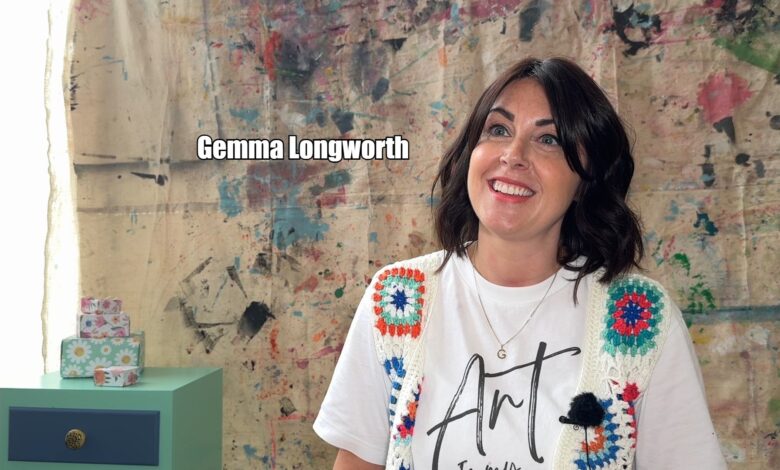
Gemma Longworth is a Liverpool-based artist, designer, upcycler, workshop leader, and TV presenter best known for her work on Channel 4’s restoration show Find It, Fix It, Flog It. She has built a name around creativity, sustainability, and the idea that old objects can be given a fresh purpose instead of being thrown away.
What makes her interesting is not just her television presence. Gemma’s work connects design with emotion. She does not simply repaint furniture or decorate old pieces for style; she often treats creativity as a way to bring comfort, confidence, and personal expression into people’s lives.
Over the years, she has moved from furniture upcycling and creative design into wider community work. Through Hidden Gems CIC, she now focuses on creative wellness and bereavement support, using art and craft as a gentle way to help people process difficult emotions.
Who Is Gemma Longworth?
Gemma Longworth is a creative professional from Liverpool who became known to a wider audience through her role as a furniture upcycler and presenter on Find It, Fix It, Flog It. The show follows the idea that forgotten, damaged, or unwanted items can be restored, redesigned, and sold again with new value.
Her public identity is closely linked with upcycling, art, and hands-on design. Unlike many TV personalities who focus mainly on entertainment, Gemma brings practical skill to the screen. She understands materials, colour, texture, shape, and the emotional pull old objects can carry.
Gemma’s work also reflects a strong local creative spirit. Liverpool has a rich arts and maker culture, and her career fits naturally into that world. She represents the kind of designer who sees beauty in overlooked things and encourages others to do the same.
Her Career in Upcycling and Creative Design

Before becoming familiar to TV viewers, Gemma Longworth built her reputation through creative design and furniture transformation. Her work has often been connected with turning everyday objects into stylish, useful, and character-filled pieces. That skill made her a natural fit for restoration television.
Upcycling is not just about saving money. At its best, it is about imagination. Gemma’s approach shows how an old chair, cabinet, barrel, box, or table can become something completely different with the right idea and careful finishing. This is why her work appeals to people who love home interiors, sustainability, and practical creativity.
Her style also feels accessible. She does not make creativity look cold or overly complicated. Instead, she shows that design can be fun, personal, and achievable. That is one reason many viewers connect with her work: it feels inspiring without feeling out of reach.
Gemma Longworth on Find It, Fix It, Flog It
Find It, Fix It, Flog It introduced many viewers to Gemma Longworth as a skilled restorer and upcycling expert. The programme features presenters and makers who find neglected items, repair or redesign them, and then try to sell them for a profit. Gemma appeared as part of the creative restoration side of the show.
Her role on the show highlighted her practical eye. She could look at a tired object and see what it might become, not just what it currently was. That is the heart of good upcycling. It requires vision before the first coat of paint, cut of fabric, or design decision is made.
The show also helped bring upcycling into everyday homes. Viewers could see that restoration was not only for antique experts or professional workshops. With patience, tools, and creativity, ordinary people could give old furniture a second life too.
Her Creative Style and Upcycling Philosophy
Gemma Longworth creative style is warm, hands-on, and full of personality. She often works with objects that already have a past, which gives her designs more depth than something bought new from a shop. Instead of hiding every mark of age, upcycling often celebrates character.
Her philosophy seems rooted in transformation. A damaged piece is not automatically useless. A worn surface is not always a problem. Sometimes, those imperfections become part of the story. This mindset makes her work feel more human and less factory-made.
That is also why her designs connect with sustainability. Upcycling reduces waste and encourages people to rethink how they consume. In a world where many things are replaced too quickly, Gemma’s work reminds people that repair, redesign, and reuse can be both stylish and meaningful.
Hidden Gems CIC and Creative Bereavement Support
One of the most meaningful parts of Gemma Longworth’s recent work is Hidden Gems CIC. She created Hidden Gems as a community-focused project offering creative wellness workshops and bereavement support groups. The idea is to use art, craft, and creativity as a safe way for people to express emotions.
Gemma has spoken publicly about being a bereaved sibling and how creativity helped her process grief. That personal experience appears to be a major part of why Hidden Gems exists. Rather than keeping art only as a design career, she uses it as a form of support and healing.
The project has also been connected with support for bereaved children and families. For example, Alder’s Hidden Gems has been described as a group for children affected by the death of a child, taking place at The Alder Centre connected with Alder Hey Children’s NHS Foundation Trust.
Why Gemma Longworth’s Work Stands Out
Gemma Longworth stands out because her career combines creativity with purpose. Many designers can make something look beautiful, but her work goes beyond surface-level style. She connects design with storytelling, sustainability, emotional wellbeing, and community care.
Her TV work made her visible, but her community work gives her public image more depth. She is not only known for transforming furniture; she is also known for creating spaces where people can use art to feel supported. That balance makes her career more meaningful than a standard television profile.
Her journey also shows how creative skills can grow in different directions. A person can start with furniture, interiors, or craft and later use the same talent to support people emotionally. Gemma’s work proves that creativity is not just decoration. Sometimes, it becomes communication, therapy, memory, and hope.
Public Interest and Online Searches About Gemma Longworth
People often search for Gemma Longworth because they have seen her on Find It, Fix It, Flog It or because they are interested in upcycling and furniture restoration. Her name is strongly connected with practical design, old furniture makeovers, and creative reuse.
Others search for her because of Hidden Gems CIC and her work around bereavement support. This side of her career attracts people who are interested in art for wellbeing, grief support, creative therapy, and community-based projects.
Her story appeals to more than one audience. TV viewers know her as an upcycling expert. Creative people see her as a designer and maker. Families and community groups may connect with her wellness work. That mix gives her a unique place in the UK creative scene.
Conclusion
Gemma Longworth is more than a familiar face from a restoration show. She is an artist, upcycler, presenter, and community-focused creative who has turned her skills into something useful, inspiring, and emotionally meaningful.
Her work on Find It, Fix It, Flog It helped show audiences the value of forgotten objects. Her upcycling approach encourages people to look again before throwing something away. Through design, she proves that old pieces can still have charm, value, and purpose.
Also Read:Luxmy Gopal Height