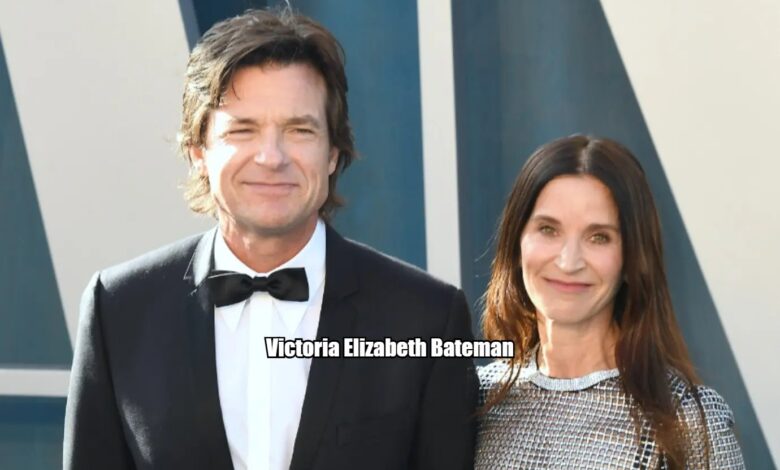
Who Is Victoria Elizabeth Bateman?
Victoria Elizabeth Bateman is a search term many readers use when looking for Dr. Victoria Bateman, a British economist, economic historian, academic, writer, and public commentator. Public academic sources mainly identify her professionally as Dr Victoria Bateman, especially in connection with her work at Cambridge, her books on economic history, and her public arguments about women’s freedom, markets, and power.
What makes Bateman stand out is not just that she writes about economics. Many economists do that. Her real difference is the way she connects economic history with everyday social questions: Why do some countries grow rich? Why are women’s contributions often ignored? Why do markets, freedom, and gender equality matter when we talk about prosperity? Her work is built around these big questions, but she explains them in a way that reaches beyond university classrooms.
She is also known for a very bold public style. Bateman has used writing, media appearances, lectures, art, and protest to make people pay attention to issues such as Brexit, sexism in economics, and women’s bodily freedom. Whether people agree with her methods or not, her approach has made her one of the more recognizable public-facing economists in modern Britain.
Early Life and Victoria Elizabeth Bateman
Victoria Elizabeth Bateman was born in Tameside, Greater Manchester, and her background shaped the way she later understood economics. Her official biography describes her as coming from a line of cotton mill workers, which is important because it connects her academic interest in economic history with real working-class experience. For her, economics was never just about graphs or theories; it was also about families, jobs, poverty, and opportunity.
She grew up during a period of economic change in Britain, and that environment helped push her toward the major questions economists often ask. Issues like boom and bust, poverty, inequality, and national prosperity were not distant textbook ideas for her. They were connected to the world around her, which later gave her writing a more personal and grounded edge.
Her education followed a strong academic path. After studying at Saddleworth School and Oldham Sixth Form College, she studied Economics at the University of Cambridge. She later completed a master’s degree in Economic and Social History and a DPhil in Economics at the University of Oxford, before returning to Cambridge as a Fellow in Economics in 2009.
Academic Career and Research Focus
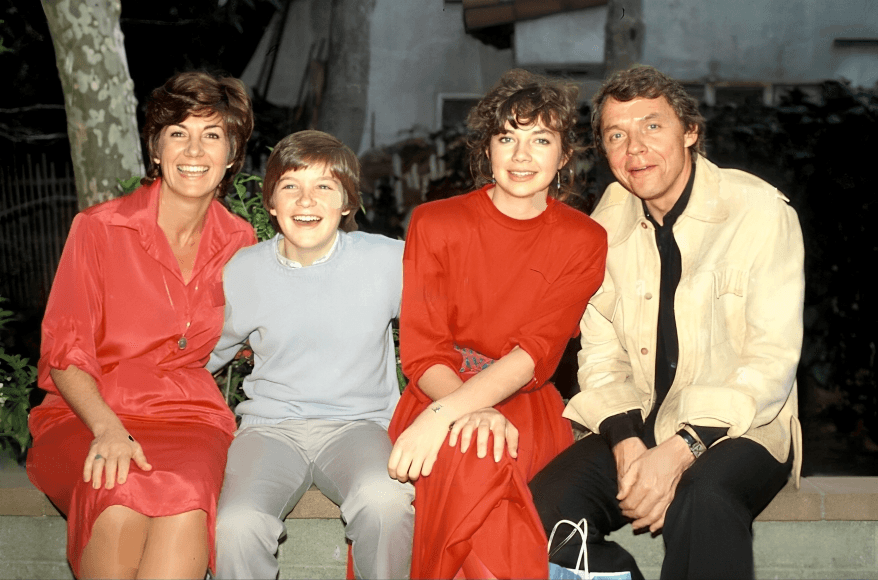
Victoria Elizabeth Bateman academic career is closely linked with Cambridge. She became a Fellow in Economics at Gonville and Caius College and later Director of Studies in Economics there. This role placed her not only in research but also in teaching and guiding students through economics as a discipline.
Her research focuses strongly on economic history, feminist economics, gender inequality, and the Industrial Revolution. The Economics Observatory describes her as an economist and economic historian specializing in both the Industrial Revolution and feminist economics. This combination is important because it allows her to look at growth and development through a wider lens than traditional economic history often uses.
Instead of treating women as a side note in economic development, Bateman argues that women’s work, rights, choices, and freedoms are central to understanding prosperity. This is one of the biggest themes in her career. She studies how economies develop, but she also asks who gets counted, who gets ignored, and whose labour is treated as valuable.
Books, Writing, and Public Ideas
One reason people search for Victoria Elizabeth Bateman is because of her books. Her published work covers economic history, feminist economics, women’s rights, and gender inequality. Her official biography notes that she has written books and academic papers on topics ranging from market development in history to the decriminalisation of sex work.
Her book The Sex Factor: How Women Made the West Rich brought together her interest in economic growth and women’s freedom. The core idea behind the book is that women were not passive observers in the rise of Western prosperity. Instead, their labour, skills, choices, and economic participation played a much bigger role than many older histories recognized.
Her later book Economica: A Global History of Women, Wealth and Power expands that argument on a much wider scale. The book places women at the centre of economic history from the Stone Age to the present, covering major economic milestones through the experiences of women as well as men. It was released in the UK on August 28, 2025, and in the US on September 30, 2025.
Feminism, Protest, and Public Attention
Victoria Elizabeth Bateman is not only an academic writer; she is also a public feminist voice. She has spoken about gender inequality, the crisis in care, capitalism, economic growth, the Industrial Revolution, and Brexit at festivals, public events, and media platforms. Her public work shows that she sees economics as something that affects real people, not just governments or financial institutions.
Her most controversial public actions involve using her own body in art and protest. According to her official biography, she has used nudity in public performances and protest to challenge stigma around women’s bodies, confront sexism in economics, and oppose Brexit. Her naked portraits have also been displayed in formal art settings, including Mall Galleries in London, with one on permanent display at Girton College, Cambridge.
This part of her public Victoria Elizabeth Bateman can be divisive. Some people focus only on the shock value, while others see it as part of her wider argument about freedom, modesty, and women’s control over their own bodies. Either way, Bateman’s method is intentional: she uses discomfort to force a conversation that many people might otherwise ignore.
Why Victoria Elizabeth Bateman Matters Today
Victoria Elizabeth Bateman matters because her work pushes readers to rethink what economic history includes. Traditional economic stories often focus on kings, states, factories, banks, male inventors, and male business leaders. Bateman’s work asks what happens when women’s labour, care work, business activity, and freedom are placed at the centre instead of the margins.
Her ideas also matter because gender inequality is not only a social issue; it is an economic issue too. When women are excluded from education, property rights, employment, entrepreneurship, or public life, economies lose talent, productivity, and innovation. Bateman’s writing helps connect these dots in a way that is easy for general readers to understand without making the subject feel shallow.
She also represents a modern type of academic: someone who does not stay hidden inside journals and lecture halls. Victoria Elizabeth Bateman books, public talks, media interviews, and controversial activism, she brings academic arguments into public debate. That makes her work more visible, more debated, and sometimes more criticized—but also harder to ignore.
Conclusion
Victoria Elizabeth Bateman, more commonly known in public academic sources as Dr Victoria Bateman, is a British economist and economic historian whose work connects growth, gender, freedom, and power. Her academic background at Cambridge and Oxford gives her strong scholarly authority, while her public voice makes her far more visible than many economists.
Her career is built around one powerful idea: women have always mattered to economic life, but history has often failed to show it clearly. Through books like The Sex Victoria Elizabeth Bateman and Economica, she challenges readers to look again at prosperity, markets, and economic development through a more complete lens.
Also Read: James Iannazzo